Fright Train Enemies and Monsters
Armor, weak points, and pack behaviors that punish spray-and-pray.
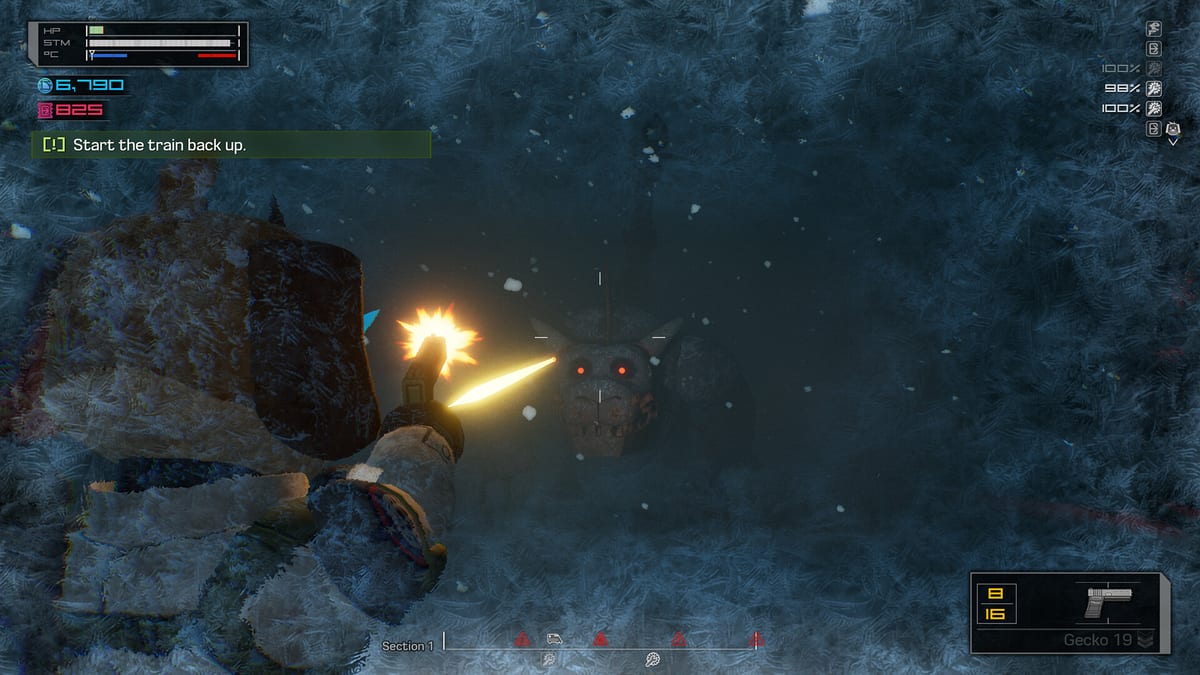
The Great White is not empty — it is an ecosystem. This enemies guide explains how Fright Train wants you to read monsters: armor, weak points, storm spawn routes, and the volatile behaviors that let foes support or sabotage one another.
Use it beside Combat and Storms and the Weapons Tier List. Exact creature names may expand after patches; the combat grammar stays the lesson.
Design pillars
- Intertwined behaviors — killing order matters because enemies interact.
- Armor and weak points — some targets shrug frontal spray until you expose a break.
- Storm ingress — windows and vents are gameplay, not wallpaper.
- Outside threats — the blizzard is populated; stopping the train invites worse company.
Target priority framework
When a car explodes into chaos, ask:
- Who is enabling the rest of the pack?
- Who is armored and currently exposable?
- Who forces me out of my hold angle?
- Who is leftover trash once the board is stable?
If you always shoot nearest-first, support threats will keep restocking your misery. If you always tunnel the tank first without a weak-point plan, you burn mags and car integrity together.
Armor literacy
Armored enemies exist to tax impatience. Steady aim, correct caliber, and angle changes beat hip-fire heroics. Precision kits from the A-tier rifle conversation earn their keep here; shotgun deletes still matter for the unarmored friends standing in the doorway. Pack mags before the fight — see Inventory Management.
Storm spawn literacy
During lock-ins, treat open glass as a spawn permission slip. Close shutters through window terminals when you can. Every sealed window is one less direction that demands a 180. Maintenance and combat are the same skill tree; Keep the Train Running is not optional reading.
Exterior and stop penalties
If integrity fails and the train stops, you inherit an outside repair under pressure. Heat pads become armor. Lingering to screenshot the snowscape is how highlight reels end early. Clear a lane, repair, leave.
Learning loop after deaths
Write one line in your head:
- “Died to armor because I never aimed the weak point.”
- “Died to surround because shutters were open.”
- “Died to reload because mags were on my back.”
- “Died outside because I sold antifreeze.”
Each line maps to a wiki page. That is intentional.
Encounter recipes
Narrow aisle: funnel melee, shotgun confirm, pistol clean-up.
Armored pair: isolate, break weak point, ignore trash until the break lands.
Vent flood: pre-shutter, grenade once if surrounded, reset angle.
Post-storm: repair immediately; enemies already taxed the car meter.
Related pages
The monsters are fair when you speak their language. Learn the grammar, and the horror becomes a solvable puzzle with teeth.
Field notes template
After each death, write four words in your head: angle, armor, ammo, integrity. Angle covers shutter and hold mistakes. Armor covers weak-point failures. Ammo covers packing and fetch-speed mistakes. Integrity covers slow clears that punish the train. That template turns vague frustration into a linked wiki page.
Practice drills
- One run where you only practice shutter closes before markers.
- One run where you refuse to shoot armored targets until you see the weak point.
- One run where every mag starts on a chest slot before a storm.
- One run where you repair early even if a loot room is glowing.
These drills teach enemy literacy faster than grinding the same panic pattern. Pair them with Combat and Storms and Keep the Train Running.
When new creatures appear after patches
Skim Updates first, then return here and add the new silhouette to your priority heuristic. Do not throw away a working shotgun plan because one trailer clip looked scary — measure clear times in your cars.
Frequently Asked Questions
Quick answers for Antarctic agents.
Why do enemies sometimes feel like they help each other?
Because they do — the combat ecosystem allows support and sabotage interactions. Change focus fire accordingly.
How do I deal with armor?
Find weak points, steady your aim, and use weapons that can actually break the plate. Spray wastes storm time.
Do storms change enemy rules?
Storms add lock-ins and window/vent spawns. Prep shutters and mags before the marker hits.
Should I always kill the closest enemy first?
Not always. Delete support threats and exposable armor first when the pack is feeding itself.