Fright Train Review
Who should board the Great White, what works, what frustrates, and a post-launch verdict.
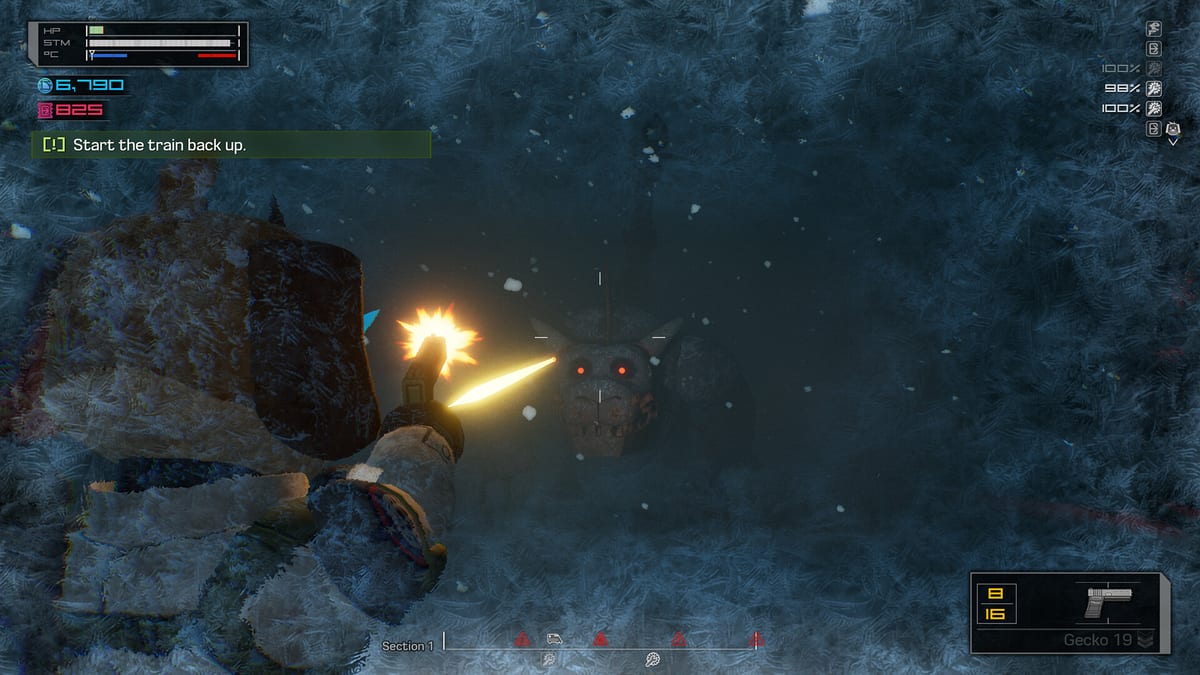
This Fright Train review is for Steam players deciding whether WildArts’ Antarctic train horror belongs in their library after the September 15, 2026 release. It is not a spoiler dump and not a patch-notes mirror. It answers a practical question: who is this for, what systems carry the fantasy, where the friction bites, and whether the full game is worth boarding tonight.
Fright Train is a single-player third-person survival horror roguelite from WildArts Games, published with Black Lantern Collective and Gamersky Games. You play canine P.A.W. agent Doug Barker aboard the L.R.S. Great White, a SHARK research locomotive racing through Antarctica. Your job is to keep the train moving, earn credits, unlock cars, and survive storm lock-ins while a Resident Evil-style inventory and Zombies-style wave pressure fight for your attention.
Early Steam reception landed in Very Positive territory (around 91% at the launch window), and outlets such as Gaming Furever scored it around 4/5. Those numbers match the hands-on feel: systems-forward horror with a strong identity, not a hollow corridor tour.
Who this game is for
Buy Fright Train if you enjoy:
- Inventory tension as a primary skill, not a menu tax
- Short-to-medium runs with clear failure reasons
- Aisle-scale combat where shotguns and careful pistol work matter
- Atmospheric horror that still respects mechanical mastery
Skip or wait if you need friends in the same run at launch, soft aim-assist that plays the game for you, or a story that never pauses for systems. There is no multiplayer on day one. There are also no redeemable promo codes — progression comes from play, not coupon spam. See Codes if that search brought you here.
If you bounced off an older demo, do not judge the release solely on that memory. The Steam demo was deactivated on September 16, 2026; itch.io may still host a free taste. Full onboarding context lives in Getting Started and Launch and Patches.
Strengths that sell the fantasy
Tactical body inventory
The best idea in Fright Train is that medium and large gear live on Doug’s body, and fetch speed depends on slot. A magazine on the chest strap is combat power; the same magazine on the lower back is a death timer. Reloading is not one button fantasy — you pack magazines, then seat them. That friction sounds annoying on paper and becomes the game’s personality in practice. Master it with Inventory Management and your storm clears get quieter overnight.
Atmosphere on a moving prison
Corridors, cold metal, radio chatter, and the knowledge that the train itself can kill you create a tighter dread than many larger open maps. Storms that lock a car turn exploration into a siege. You are not sightseeing Antarctica — you are trapped inside a reconfiguring machine that demands antifreeze and shutters as seriously as bullets. Keep the Train Running is the companion page for that fantasy.
Shotgun geometry and pistol growth
Train aisles love close-range deletes. Shotgun kits shine at door frames and short corners. Equally important: the starter pistol upgrade path remains respectable when fully invested. Early coverage repeatedly calls out that upgrading the sidearm early is smarter than ignoring it for a shiny dead-end rifle. Cross-check spending against the Weapons Tier List before you bankrupt a run on fashion firepower.
Roguelite structure with story scraps
WildArts consolidated toward a single mode that blends notes, radio, and cutscene scraps with replayable expeditions. Failed runs still teach systems. Successful runs still feel like progress. That hybrid keeps the horror from becoming a one-and-done corridor movie.
Weaknesses you should know before buying
Controller aim softness
Keyboard and mouse tend to feel sharper for inventory multitasking plus weak-point breaks. Controllers are supported and rebinding exists, but assist can feel softer than some players expect from modern third-person shooters. If you only play pad, budget time in a quiet car to learn hipfire limits and steady-aim habits before blaming the gun. Combat and Storms covers aisle positioning that reduces how often soft aim matters.
Close-range hipfire limits
Panic sprays in closet-width cars punish players who treat every gun like an SMG. Hipfire has limits. Storms reward pre-packed magazines and held angles more than wild strafing. That is a strength for skilled agents and a wall for players who want Call of Duty movement with horror cosmetics glued on.
Economy gates can feel rude at first
One-time door fees and credit scarcity force scavenging. New agents sometimes interpret that as padding. It is pacing. Once you stop sprinting past every vending machine and maintenance terminal, the economy becomes readable instead of hostile.
Verdict
Recommended for players who want inventory-forward survival horror with a distinctive train fantasy and replayable storm exams. The launch window’s Very Positive reception is earned by systems that respect attention: body slots, integrity meters, shutters, and gun kits that match car geometry. Soft controller aim and hipfire discipline are real caveats, not deal-breakers if you are willing to learn.
If you are still unsure, read Getting Started, skim Inventory Management, then watch a real first-impressions session and decide with eyes open. If you already own it and keep dying to the locomotive rather than the monsters, skip the vibes debate and open Keep the Train Running tonight.
Scorecard (practical, not marketing)
| Pillar | Take |
|---|---|
| Inventory identity | Excellent — the game’s soul |
| Atmosphere | Strong — moving prison dread |
| Combat readability | Good — aisle geometry matters |
| Controller comfort | Mixed — softer assist, learnable |
| Value at launch | Strong for solo horror fans |
| Shared runs | None at launch |
What to do after this review
- Bind keys and learn inventory hotkeys before your second storm.
- Upgrade the starter pistol instead of pretending it is trash.
- Keep antifreeze sacred; repair before greed doors.
- Match guns to car length via Weapons.
- Revisit Launch and Patches when Steam news lands.
Fright Train is not trying to be every shooter. It is trying to be a cold, procedural train that punishes messy backpacks. If that sentence sounds fun, board it. If it sounds like homework, wait for a deeper discount and keep watching patch notes — the core fantasy is already loud enough to recommend.
Frequently Asked Questions
Quick answers for Antarctic agents.
Is Fright Train worth buying at launch?
Yes for solo inventory-horror fans. Early Steam reception was Very Positive; soft controller aim is the main caveat.
Does Fright Train have multiplayer?
No. Launch is single-player only. Plan loadouts and knowledge for solo runs.
What is the biggest strength in this review?
Tactical body inventory and train-maintenance pressure. Start with Inventory Management.
Should controller players avoid Fright Train?
Not necessarily. Controllers are supported, but expect softer assist and practice steady aim before hard storms.
Where should I go after reading this review?
Open Getting Started and Combat and Storms, then check Launch and Patches.